
The Chronopost pickup point locator relies on the Pickup API, which queries a geocoded database of partner businesses and automatic lockers. Knowing how to use the right filters and cross-reference information sources saves real time, especially when the displayed hours do not always match the actual situation on the ground.
Advanced filters and limitations of the Chronopost location tool
The native search tool on chronopost.fr works by geolocation or postal code entry. It returns a list of Pickup points sorted by distance, with address and opening hours. On the surface, this seems sufficient.
In practice, this tool does not filter for accessibility for people with reduced mobility, parking availability, or extended hours. A point displayed as “open until 7 PM” may close for lunch without this information appearing on the official map. We regularly observe discrepancies between the theoretical time slots and the actual practices of merchants.
To compensate for this limitation, we recommend finding a Chronopost pickup point on Wiki for Home and then cross-referencing the result with Google reviews of the relevant business. Customer comments often mention recurring exceptional closures, unreported days off, and average waiting times.
Local directories like Telephone City also list Chronopost points with direct phone numbers, reviews, and popularity ratings. This type of qualitative data (perceived reliability, quality of service) does not exist on the official Chronopost maps.

Multi-carrier platforms to compare Pickup points
Multi-carrier pickup point aggregation platforms are the real lever for precise location. In recent years, several online shipping services have allowed filtering of Chronopost points based on criteria that the official tool ignores.
- Filtering by extended hours (open Saturday afternoons, late hours during the week), useful for those who cannot move during the day
- Filtering by accessibility for people with reduced mobility, indicating ground level or ramp access
- Filtering by nearby parking availability, relevant in suburban areas where parking influences the choice of pickup point
- Simultaneous display of competing points (Mondial Relay, Relais Colis) on the same map, allowing for comparison of coverage density by neighborhood
These tools aggregate Pickup data via API and enrich it with additional metadata. The result is a more usable map than that of the Chronopost site, especially for regular shippers looking to optimize their drop-off routes.
Pickup lockers and network densification in suburban areas
The Pickup automatic locker network is densifying on the outskirts of cities, particularly near shopping centers and in business zones. This trend serves a dual purpose: to ease the activity of saturated partner businesses and to offer wider pickup time slots, sometimes accessible continuously.
For a recipient, the Pickup locker has a clear advantage: no waiting in line, no dependence on the merchant’s hours. Pickup is done via a code or QR code received by SMS. The constraint lies in the dimensions of the package, limited by the size of the locker.
The Chronopost locator now distinguishes lockers from traditional points on its map. We recommend prioritizing lockers for small packages when the nearest point has mixed reviews regarding waiting times.
Check the actual availability of a locker
A locker displayed as available may be temporarily full. No real-time fill indicator is provided by Chronopost at this stage. The only way to ensure this is to check the package status in the Chronotrace tracking after shipment.
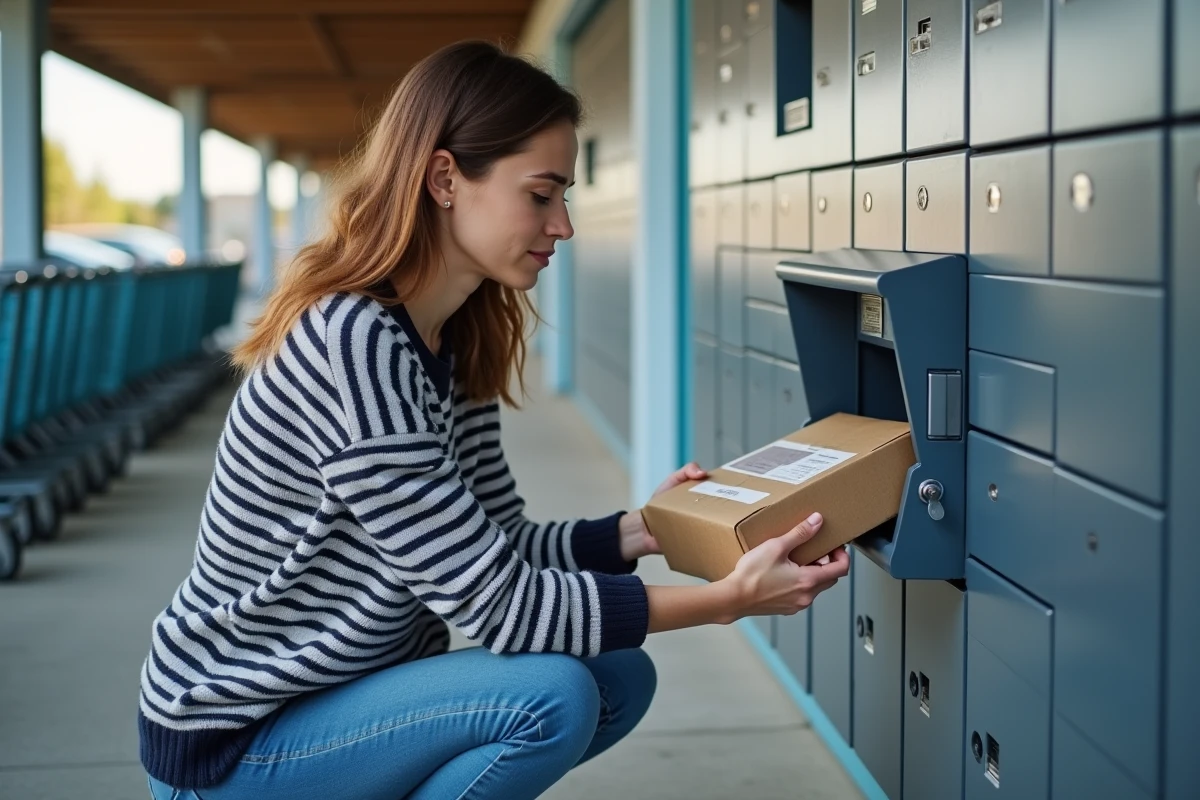
Chronopost points: cross-reference sources to avoid unnecessary trips
The most common problem is not locating a point, but traveling for nothing. A partner business may be on annual leave, have reduced hours, or even have ceased its pickup activity without the Chronopost database being updated immediately.
Before you travel, three checks take less than a minute:
- Check the Google Maps listing of the business to read recent reviews and verify the opening hours updated by the merchant
- Search for the phone number in a local directory and call directly, especially during school holidays or public holidays
- Verify on Chronotrace that the package has indeed arrived at the point before going to pick it up
This triple check seems basic, but field feedback shows that theoretical hours often diverge from reality. A point displayed as open on Monday morning may be systematically closed that day without this information being updated in the Pickup database.
Choosing a Chronopost pickup point is not just about geographical proximity. A point located three hundred meters further away but with reliable hours and positive reviews remains a better choice than a point around the corner whose actual practices are unpredictable.