
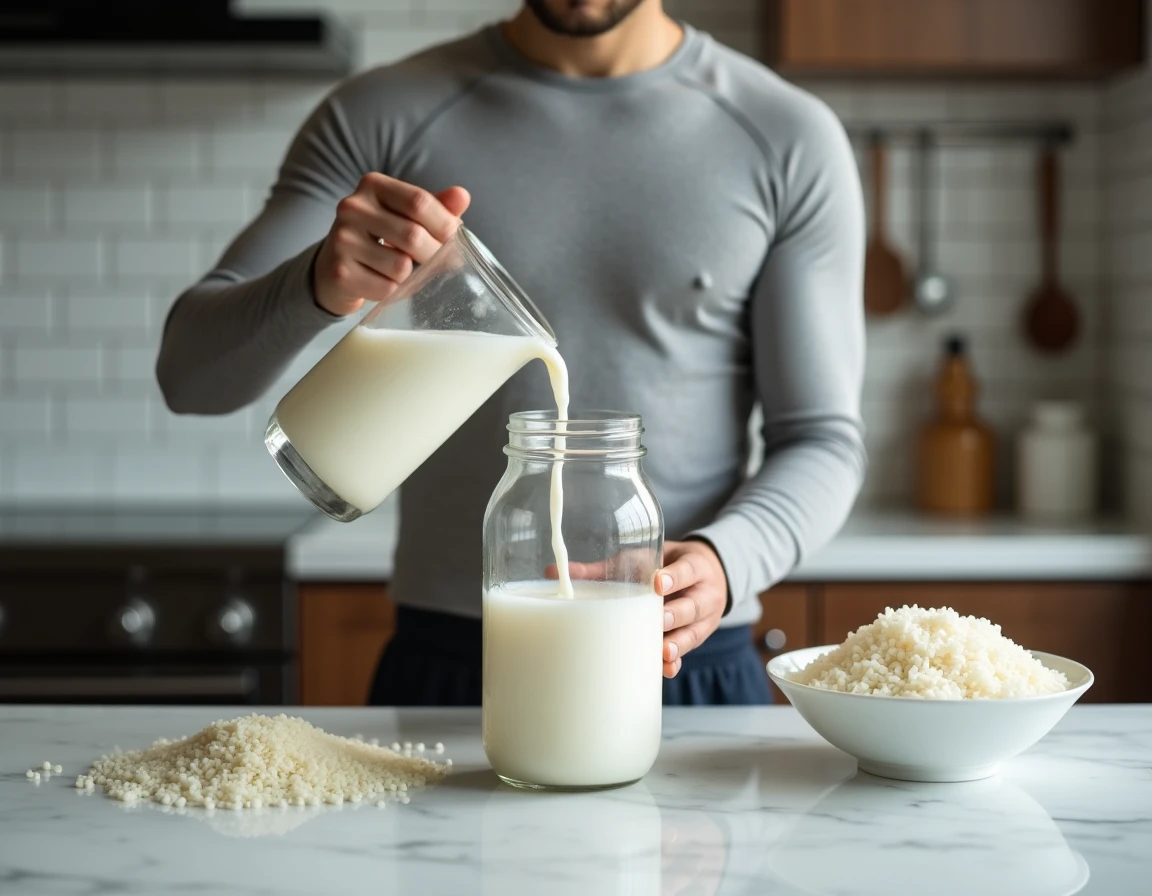
Rice water circulates on networks as a miracle drink for athletes in recovery. Rich in residual starch and naturally gluten-free, this homemade preparation appeals due to its simplicity. The question arises: do its nutritional contributions justify substituting it for traditional recovery drinks, which are better documented by research?
Nutritional profile of rice water compared to traditional recovery drinks
To assess the interest of rice water after exercise, we must first compare what it actually provides to what common alternatives offer. Commercial recovery drinks generally combine carbohydrates, electrolytes, and sometimes proteins. Rice water, on the other hand, primarily delivers diluted starch.
| Criterion | Homemade rice water | Carbohydrate + electrolyte drink | Chocolate milk |
|---|---|---|---|
| Carbohydrates | Residual starch (low concentration) | Calibrated concentration | Lactose + added sugars |
| Proteins | Traces | Absent or added | Milk proteins |
| Electrolytes (sodium, potassium) | Very low content | Dosage suitable for rehydration | Present naturally |
| Scientific validation in sports context | Almost nonexistent | Solid (systematic reviews) | Several favorable studies |
| Digestive tolerance | Good | Variable depending on formulas | Problematic if lactose intolerant |
This table highlights a clear imbalance. Rice water contains neither electrolytes nor proteins in significant quantities, two elements that scientific literature directly associates with muscle glycogen replenishment and post-exercise rehydration. You can find sports advice on Fiteo to delve deeper into the use of this drink in a sports routine.
Rice water and post-exercise rehydration: what research really shows
The main argument in favor of rice water is based on its historical use as an oral rehydration solution. Clinical studies on this subject exist, but they concern the management of acute diarrhea and pathological dehydration, not recovery after endurance or strength training.
A systematic review from 2022 on recovery drinks confirms that carbohydrate solutions enriched with electrolytes remain the best documented for restoring glycogen stores and compensating for fluid losses due to sweating. Milk (plain or chocolate), thanks to its natural combination of carbohydrates, proteins, and sodium, is also among the most studied options with favorable results.
Rice water simply does not appear in these research protocols applied to sports. This does not mean it is harmful, but no published data validates it as a muscle recovery drink in the sense understood by exercise physiologists.
Glycogen replenishment: a carbohydrate supply too diluted
After prolonged effort, the replenishment of glycogen stores depends on the amount of carbohydrates ingested in the first hours. The usual recommendations in sports nutrition focus on calibrated intakes of quickly assimilable carbohydrates.
Rice water provides starch in a diluted solution. The concentration obtained after home cooking remains low and variable depending on the water/rice ratio, cooking time, and type of rice used. In contrast, an isotonic drink or a glass of chocolate milk delivers a predictable and reproducible amount of carbohydrates, making it easier for regular athletes to track their nutrition.
Microbiological risk of rice water stored after preparation
A rarely addressed angle in content promoting rice water: food safety. The recommendations from European health agencies are clear on this point.
- Bacillus cereus, a spore-forming bacterium, easily proliferates in cooked rice and its liquid derivatives left at room temperature for more than two hours.
- In the refrigerator, the recommended storage duration for rice water does not exceed twenty-four hours without prior heating.
- Rice and its by-products are among the foods most frequently involved in foodborne illnesses related to poor storage.
For an athlete who prepares their drink in the morning and consumes it in the gym several hours later, the risk of bacterial contamination is real if the cold chain is not respected. This risk does not exist with a powder drink reconstituted on demand or a sterile pouch.

Digestive tolerance: the real asset of rice water for certain athletic profiles
If rice water does not compete on pure nutritional grounds, it presents a concrete advantage for athletes suffering from digestive issues during exertion. Rice starch is naturally gluten-free, low in fiber, and well tolerated by sensitive intestines.
Endurance athletes (long-distance running, cycling) frequently experience gastrointestinal discomfort during or after exertion. For these profiles, rice water can serve as a light rehydration base in addition to a more concentrated source of carbohydrates and electrolytes, rather than as a standalone recovery drink.
How to integrate it without replacing protein and electrolyte intake
The most coherent approach is to use rice water as a vehicle, not as a complete solution. Here are some concrete suggestions:
- Add a pinch of salt (sodium) and a splash of lemon juice (potassium) to get closer to a minimal electrolyte profile.
- Consume alongside a source of plant or animal protein within thirty minutes after exertion: yogurt, cottage cheese, a handful of almonds.
- Prepare rice water just before consumption or store it in the refrigerator for less than twenty-four hours to limit bacterial risk.
This combination allows for the digestive tolerance of rice while covering the actual needs for proteins, energy, and minerals that muscle recovery requires.
Rice water remains an interesting natural drink for athletes looking to limit digestive issues, but it does not replace a complete recovery strategy combining calibrated carbohydrates, proteins, and electrolytes. The popularity of a preparation does not guarantee its effectiveness, and current scientific data points towards better-validated alternatives for restoring glycogen and supporting muscle repair after exertion.