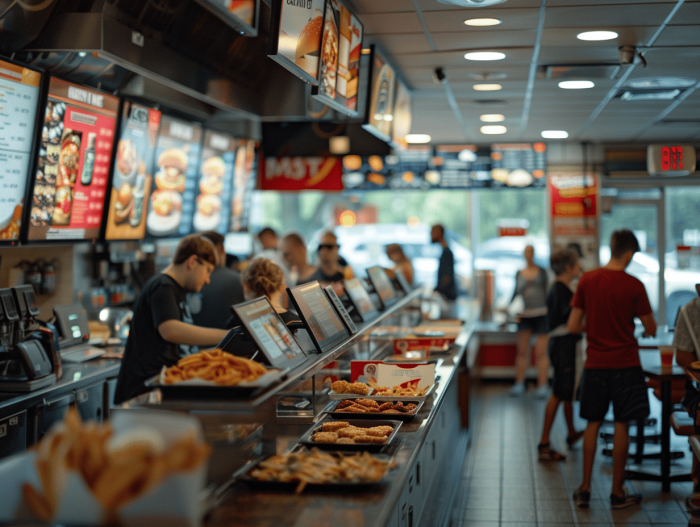
The prices of menus in fast food chains are experiencing a significant increase in 2024, disrupting consumer habits. This phenomenon results from multiple factors, including inflation, rising costs of raw materials and wages, as well as new environmental regulations. This evolution directly impacts the daily lives of families and workers seeking quick and affordable meals. Low-income households are forced to rethink their food budgets, while office employees must reassess their lunch options. Restaurateurs, for their part, must juggle these new constraints to maintain their loyal customer base.
The factors influencing the evolution of fast food costs in 2024
The increase in costs in the fast food sector in France in 2024 is the result of several dynamics.
Inflation and raw materials
INSEE observes a general increase in food prices, directly affecting fast food menus. The rising costs of raw materials, such as meat, dairy products, and vegetables, are reflected in the prices offered to consumers. The Happy Meal price, for example, has seen a notable increase, prompting families to reconsider their meal budgets.
Wages and regulations
New environmental regulations and wage increases in the restaurant sector also impact costs. Companies must comply with stricter standards, leading to additional expenses. Orcun Group, a major player, is working on optimizing the offer to minimize these costs while adhering to new legislation.
Market adaptations
In the face of these challenges, restaurateurs are seeking to adapt. Strategies include:
- Reducing portion sizes to maintain competitive prices.
- Introducing new menus using less expensive ingredients.
- Increasing vegetarian and vegan options, which are often cheaper to produce.
The transformation of the restaurant industry is significant, affecting the attendance of fast food establishments. Although the impact is widespread, French consumers are feeling this evolution in their daily lives, altering their eating habits and meal choices.
Consequences on consumption habits and the daily lives of the French
Evolution of consumer preferences
French consumers are changing their habits in response to rising prices. Generation Z increasingly favors takeout and delivery options, responding to a growing demand for convenient and quick meals. Millennials, on the other hand, seek unique culinary experiences, often at the expense of traditional fast food attendance.
Impact on different generations
- Generation X and Baby Boomers show a preference for service quality and ambiance, which drives them towards sit-down dining or themed establishments.
- The notable decline in attendance in the themed dining and sit-down dining sectors reflects a broader trend towards more economical food choices.
Daily adaptations
French people are revising their food budgets, opting for more affordable solutions. The use of home cooking and prepared meals is becoming more frequent. Online delivery apps are seeing an increase in orders, particularly for less expensive dishes. Restaurateurs must thus adjust their offerings to meet these new expectations while managing economic constraints. The transformations in the restaurant sector in 2024 illustrate a constant adaptation of consumption habits and a tangible impact on the daily lives of the French.