
For millennia, humanity has watched with fascination the movements of the Sun, this star that governs our lives. Through the ages, civilizations have sought to understand the secrets of its daily appearance and disappearance. The accumulated astronomical knowledge has allowed for the precise prediction of its rise and set, which vary according to seasons and latitudes.
Even today, the study of the Sun continues to captivate minds. Scientists scrutinize the variations in its activity, while enthusiasts await spectacular sunrises and sunsets, witnesses to the beauty and complexity of our universe.
The Best Times to Observe the Luminous Star
Observing the Sun, this star that enlightens and warms us, requires knowledge of certain key moments and astronomical phenomena. Sunrise and sunset are privileged moments to admire the nuances of light and the play of shadows. But to maximize the experience, you must pay attention to other celestial objects that interact with our luminous star.
Venus, also known as the Evening Star, is often visible at the beginning or end of the night. This planet, the second closest to the Sun, shines brightly as it reflects sunlight. When it reaches its maximum elongation, Venus is at an optimal distance from the Sun, making its observation particularly spectacular. Its phases, similar to those of the Moon, can be admired through a telescope by amateur astronomers.
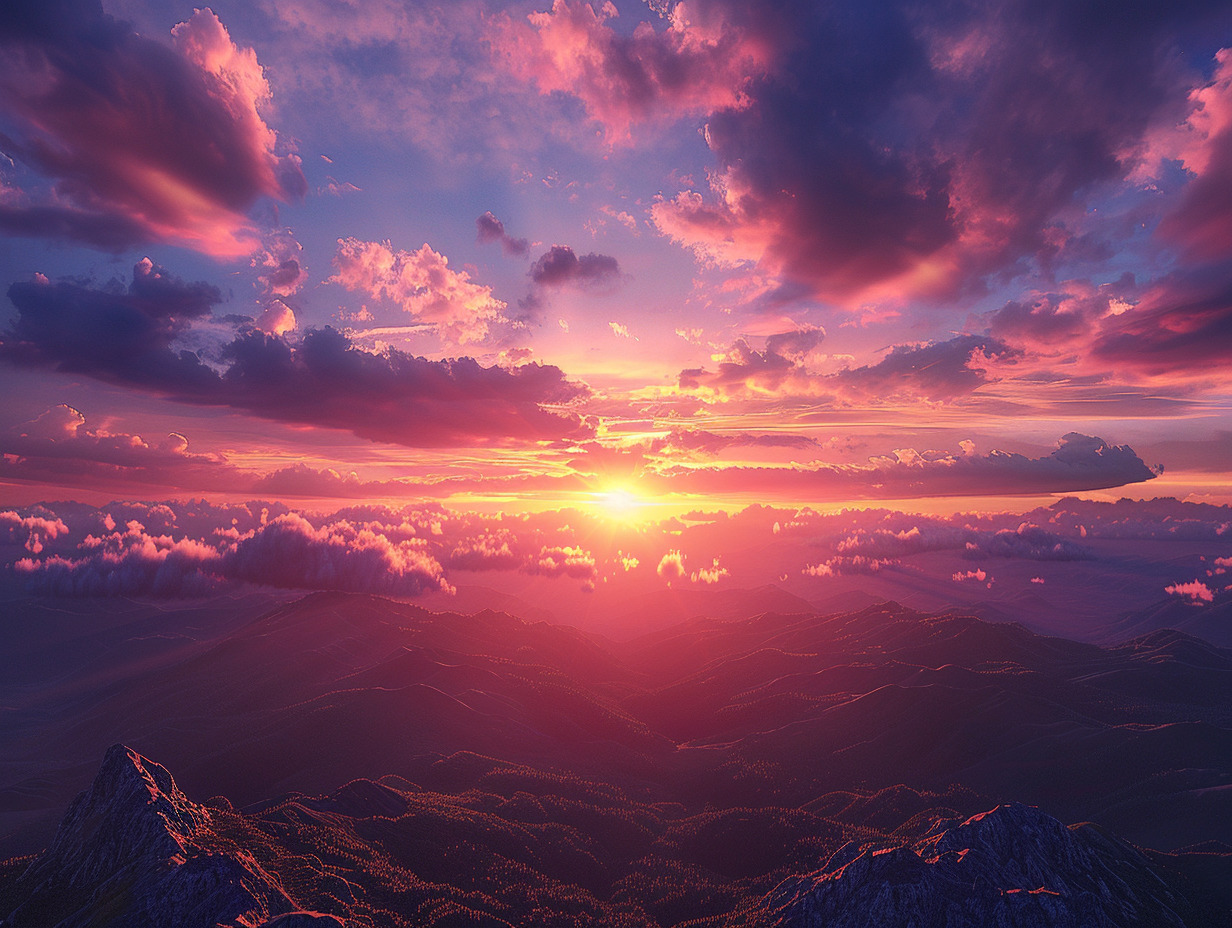
The moments when the sun rises or sets are also conducive to emotionally rich observations. The low light reveals the Earth’s reliefs with a unique intensity. The Moon, our natural satellite, often joins the spectacle, offering harmonious celestial configurations. The lunar phases directly influence nighttime brightness and, consequently, the quality of astronomical observations. Understanding these interactions and choosing the right moments to observe the sky allows for a greater appreciation of the mysteries of the luminous star.
The Ideal Locations for Optimal Observation
For optimal sky observation, several criteria must be considered. Locations far from urban lights offer the best conditions. Here are some of the favored locations for amateur and professional astronomers:
- National Parks: These protected spaces, often located far from major cities, are free from light pollution. The Cévennes National Park in France is renowned for the quality of its starry sky.
- Deserts: Deserts, such as the Atacama in Chile, provide exceptional observation conditions due to dry air and a lack of clouds.
- Professional Observatories: The Paris Observatory, where Marie-Christine Angonin works, is a center of excellence for astronomy, although located in an urban area. Other observatories, such as those situated at high altitudes, allow for a clear and stable view of the sky.
The Challenges of Modern Observation
Modernity brings its share of challenges for astronomical observation. Satellite constellations, such as Starlink, a project by SpaceX led by Elon Musk, disrupt the night sky. Jean-Paul Cornec, president of the Trégor astronomy club, explains that these satellites regularly appear in the field of view of telescopes, making observations more complex. Yann Jarno, an amateur photographer, has also noted increased light pollution due to these devices.
Iconic Celestial Targets
Certain regions of the sky particularly attract astronomers:
- Andromeda: Located 2.55 million light-years away, this galaxy is visible to the naked eye from Earth.
- Magellanic Clouds: These two dwarf galaxies are observable from the southern hemisphere and are fascinating study objects.
- Proxima Centauri: The closest star to our solar system, it is a prime target for understanding low-luminosity stars.
Consider these various elements to optimize your observations and better understand the mysteries of the luminous star and its celestial companions.