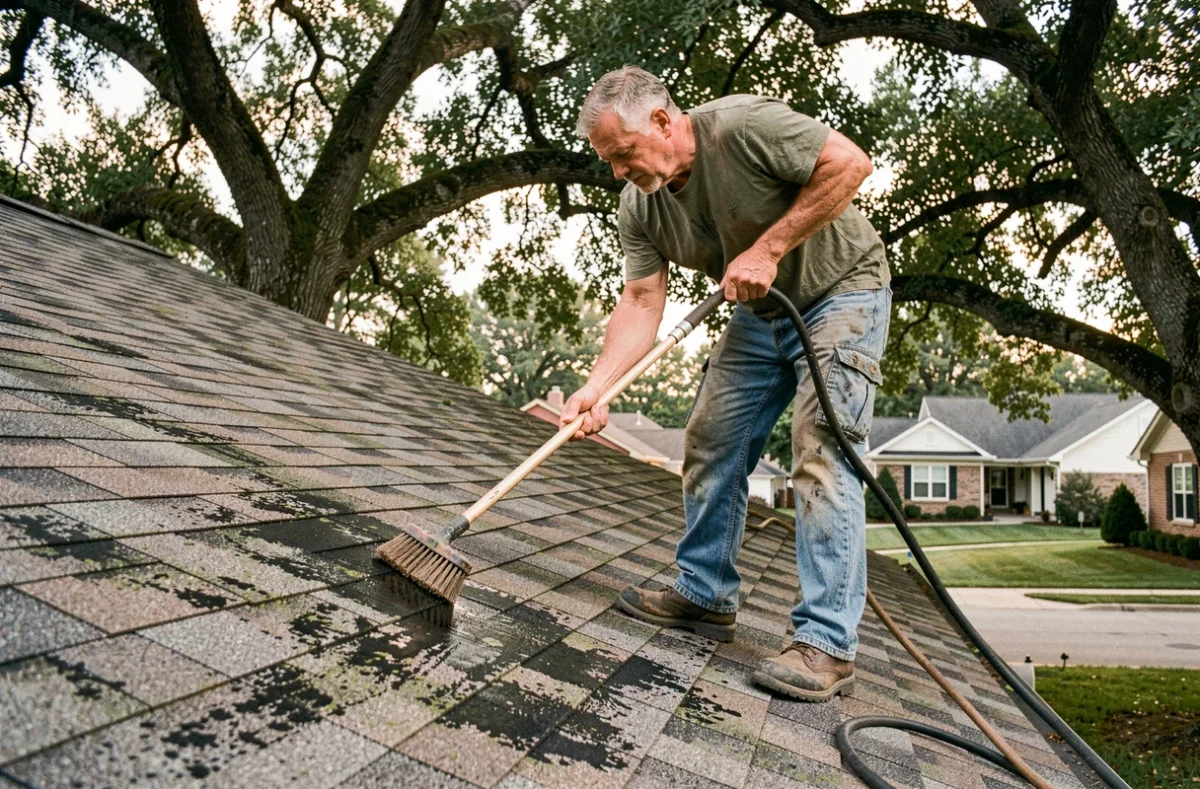
Shingle, or bitumen shingle, is a covering made of a fiberglass mat impregnated with bitumen, covered with mineral granules. These granules provide protection against UV rays and surface waterproofing. Any poorly conducted cleaning operation can strip them away and reduce the lifespan of the roof by several years.
Soft washing on shingle: the only method that preserves the granules
The Asphalt Roofing Manufacturers Association (ARMA) strongly advises against using a pressure washer on bitumen shingles. The spray, even set to moderate power, strips away the surface granules and exposes the bitumen layer to UV rays. Aging then visibly accelerates within a few seasons.
The recommended method is called soft washing. It involves spraying a suitable cleaning solution over the entire surface of the roof, allowing it to act for 15 to 20 minutes, and then rinsing at low pressure. The product dissolves moss, lichens, and algae without mechanical agitation.
Before applying anything, it is essential to check the compatibility of the product with the installed shingle model. Manufacturer instructions specify the concentrations and chemical agents allowed. A test on a small, inconspicuous area remains the basic precaution for cleaning a shingle roof without unpleasant surprises.
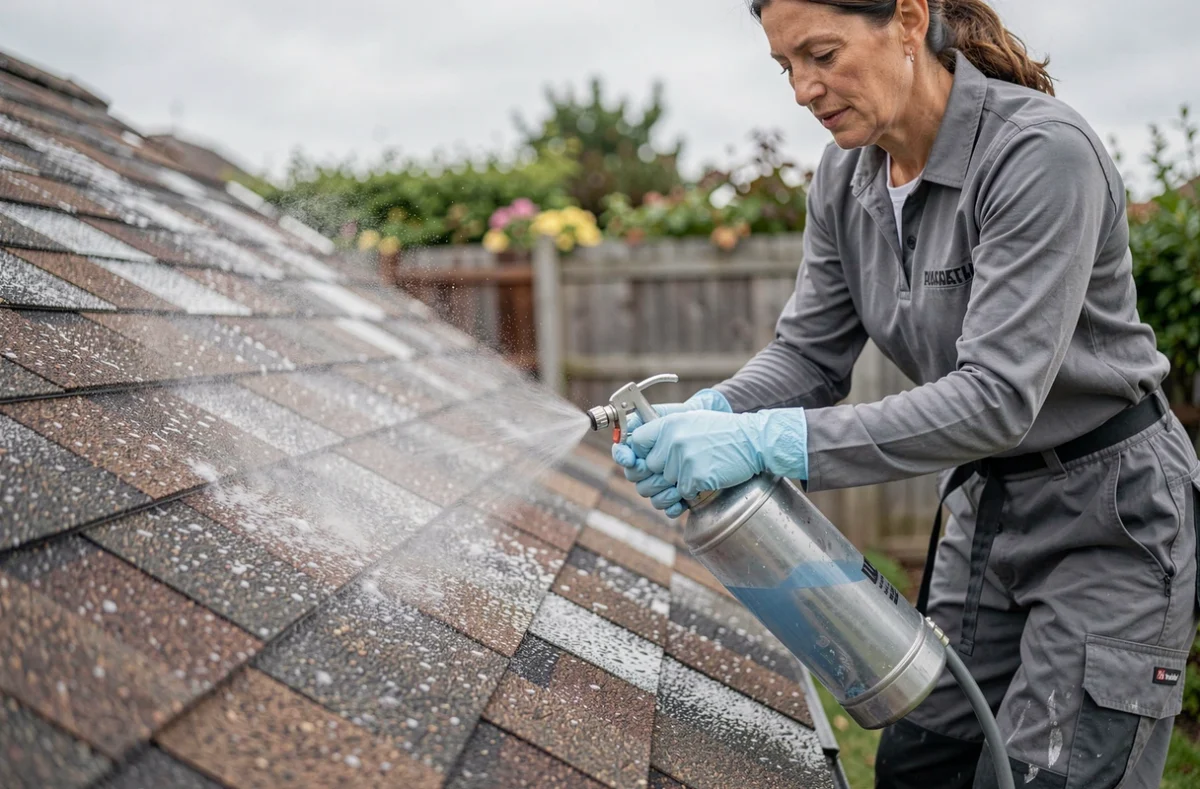
Cleaning products for bitumen shingles: what works and what degrades
The temptation of a bottle of bleach is common. A solution that is too concentrated can discolor the shingle, attack certain bitumen binders, and weaken the joints. Recent recommendations emphasize one point: never mix a cleaner with ammonia, as this can release toxic fumes and damage the roofing.
Products designed for roof moss removal (biodegradable anti-moss type) offer a better compromise. Their formulation targets plant organisms without harming the substrate. For shingle, choose a product with a pH close to neutrality, applied with low-pressure spraying.
Criteria for choosing a product suitable for shingle
- Check that the label mentions compatibility with bitumen coatings or asphalt shingles, not just clay tiles
- Choose a biodegradable product to limit the impact of runoff on surrounding vegetation and downspouts
- Avoid any product containing strong acids (hydrochloric acid, phosphoric acid), which can corrode the bitumen and granules
- Follow the application time indicated by the manufacturer: a product left on too long can permanently stain the shingle
Water drainage and gutters: the factor that cleaning alone does not resolve
An anti-moss treatment loses its effectiveness if moisture stagnates on the roof. Mosses and lichens develop where water remains trapped: in clogged gutters, around accumulated leaf debris, in poorly cleared valleys.
Check the gutters and downspouts before each cleaning to avoid treating a symptom without addressing the cause. A shingle that dries quickly between rains naturally resists plant colonization longer than a treated roof that remains constantly damp.
Also consider trimming branches that overhang the roof. They cast shade, retain moisture, and deposit organic debris that directly feeds the mosses.
Waterproofing protection after cleaning: conditions and limits on a bitumen shingle
Applying a waterproofing agent on a shingle only makes sense if the shingle is still in good structural condition. A shingle with significantly missing granules or raised edges will not benefit from a surface treatment: replacement then becomes the only sustainable option.
On a healthy and clean shingle, a film-forming waterproofing agent (which creates a waterproof film) can complement the existing protection. Application should be done in dry weather, on a perfectly dry surface, ideally in spring or early autumn when temperatures remain moderate.
Precautions during application
- Protect the vegetation at the foot of the roof with tarps: the runoff from the waterproofing agent can burn the plants
- Wear appropriate non-slip shoes: a wet or freshly treated roof presents a higher slipping risk than a simply dirty roof
- Do not apply waterproofing if rain is forecast within the next 24 hours, as this may dilute the product before it polymerizes
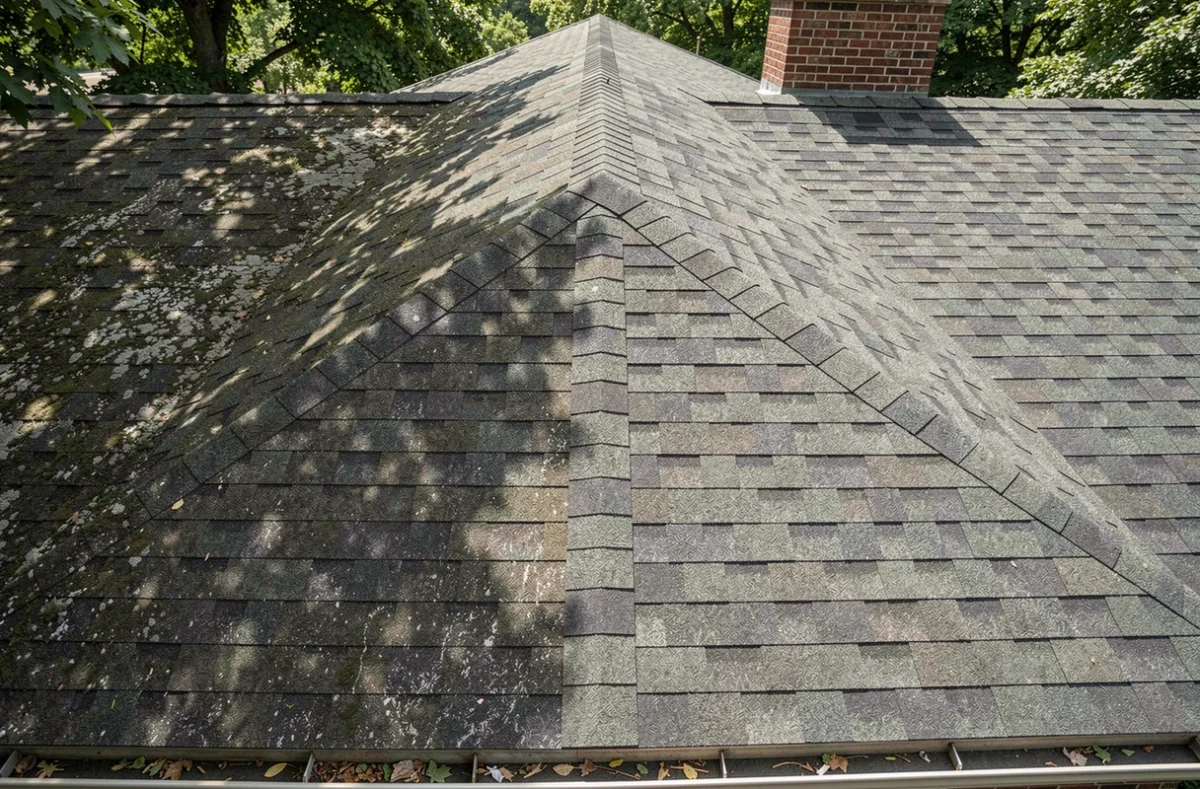
Frequency of cleaning a shingle roof according to exposure
A shingle installed in a shaded and damp area (near a forest, north-facing slope) requires inspection and cleaning much more frequently than a shingle oriented south in an open area. In the first case, an annual visual check and a preventive treatment every two years constitute a good rhythm.
In a low-exposure urban area, cleaning every three to four years is generally sufficient, provided that the gutters are maintained in the meantime. Visual inspection from the ground, with binoculars if the slope is steep, allows for spotting the first black or greenish marks without climbing onto the roof.
Shingle remains a material that ages well when its granules are preserved and water flows freely. Proper maintenance suited to the substrate and environment extends its lifespan well beyond what a simple pressure wash would promise, while avoiding costly repairs related to overly aggressive interventions.