
A community percolator operates on a recirculation cycle: hot water rises through a central tube, flows over the ground coffee placed in a filter, and then descends back into the tank before rising again. This prolonged extraction mechanism requires a different dosage and grind than that of a classic drip coffee maker.
For an event with around thirty guests, the challenge does not lie in the raw calculation of the number of cups. It resides in managing the heating time, the grind size of the ground coffee, and the chosen service method.
Water Temperature and Over-Extraction in a Percolator
Most online guides focus on the water-to-coffee ratio without addressing the actual water temperature in the tank. A professional percolator heats the water continuously, and the recirculation cycle exposes the ground coffee to increasingly hot water over the minutes.
To avoid a bitter or “burnt” result, the water temperature should not exceed 90 °C. On some models without precise thermostats, this means turning off the heat as soon as the indicator light goes out, or removing the filter basket once the cycle is complete. A two-step pouring, if the percolator allows it, also reduces the thermal shock on the grind.
Mastering the coffee dosage for percolators thus begins with understanding that weight alone is not enough: water that is too hot turns a correct dosage into an undrinkable cup.
Grind Suitable for the Percolator: Why Grind Size Changes Everything
The classic pitfall is using finely ground coffee, the kind sold for Italian coffee makers or espresso. In a percolator, the water passes through the coffee multiple times. A grind that is too fine causes rapid over-extraction and a bitter, sometimes astringent taste.
The ideal grind size for a percolator is between filter grind and French press grind: visible grains to the naked eye, similar to coarse sea salt. This texture allows the water to flow without excessively retaining it in the filter basket.
- Espresso or Italian grind: too fine, guaranteed bitter taste after a few minutes of recirculation.
- Standard filter grind: acceptable, but should be monitored if the heating cycle exceeds ten minutes.
- Medium to coarse grind (French press type): the best compromise for a community percolator, especially when the coffee remains in prolonged contact with the water.
If the coffee is purchased pre-ground at a supermarket, check the indication on the package. The terms “universal grind” or “all coffee makers” often correspond to a filter grind, which remains a correct choice if nothing better is available.
Water/Coffee Ratio for Thirty Guests: Calculation and Adjustments
The starting point is simple: a standard cup of drip coffee represents about 12 to 15 cl. For thirty people each having a cup, the necessary water volume is around four to five liters. In practice, some guests will refill, while others will not drink coffee.
Basic Dosage According to Water Volume
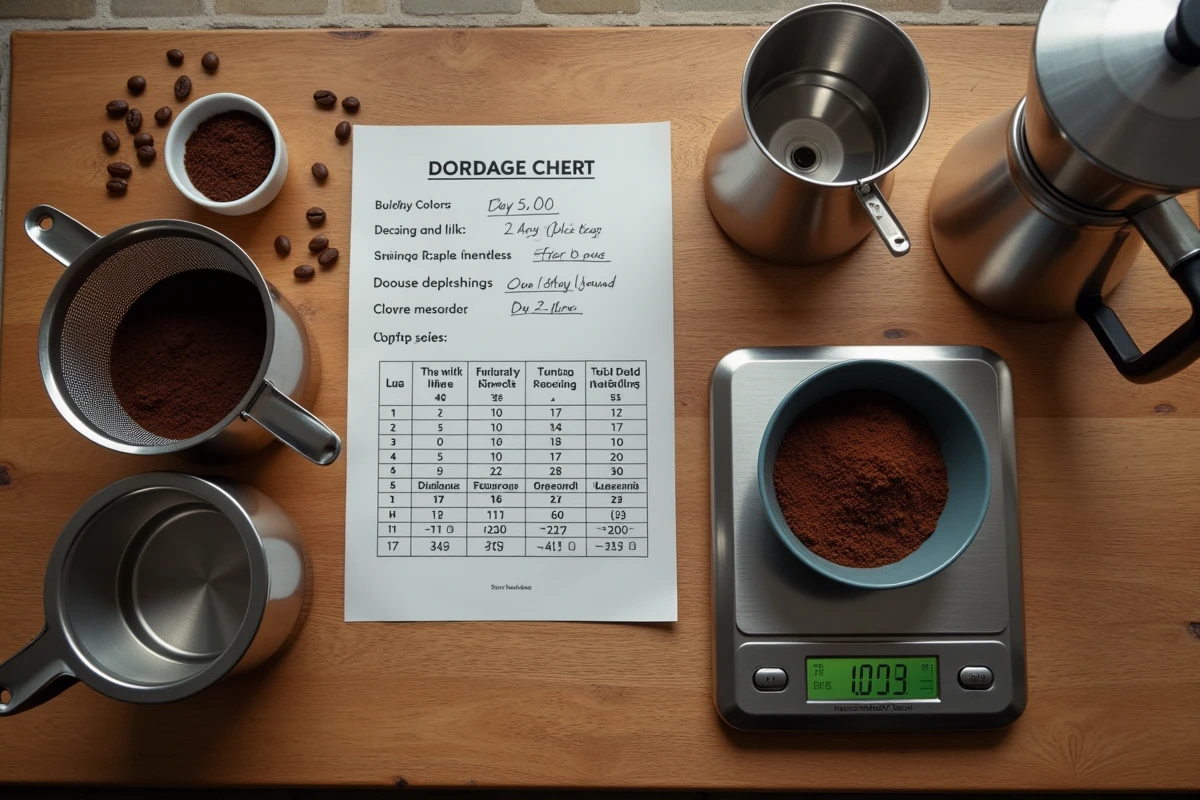
The commonly accepted rule among professionals in collective catering is to count about seven grams of ground coffee per cup. For a percolator filled with five liters, this represents just over two hundred grams of coffee. Planning between 200 and 250 grams of ground coffee for five liters of water covers the range between a light coffee and a stronger coffee.
Adjusting Intensity Without Changing Water Volume
Increasing the coffee dose is not the only variable. The contact time between the water and the grind plays a comparable role. A percolator left on prolonged heating produces coffee that becomes increasingly strong, then increasingly bitter. Slightly reducing the dosage (around 200 grams for five liters) and limiting the cycle time often yields a better result than a high dosage with a long cycle.
Keeping Warm and Service Mode: The Overlooked Angle of Dosage
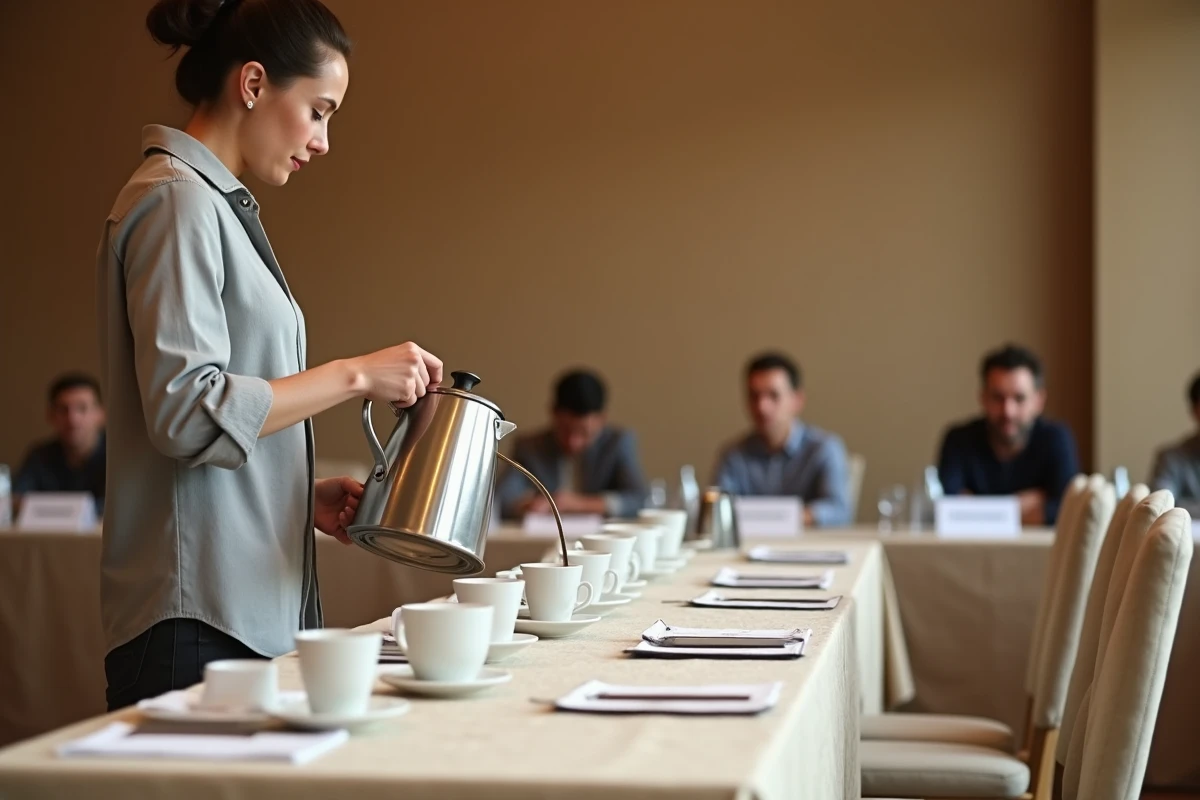
For an event with thirty people, coffee is almost never consumed all at once. Coffee breaks during seminars, wedding buffets, farewell parties: the percolator remains plugged in, sometimes for over an hour. The longer the coffee stays heated, the more its taste degrades. Bitterness increases, and volatile aromas disappear.
This phenomenon has a direct consequence on the useful dosage. Coffee prepared with a generous ratio but served thirty minutes after the end of the cycle will have lost most of its qualities. Two strategies can help circumvent this problem:
- Prepare two smaller batches rather than one large tank. Three liters served fresh, then three liters prepared half an hour later, offer a significantly better result than six liters kept warm for an hour.
- Transfer the coffee into insulated thermoses immediately after the cycle ends, then turn off the percolator. Keeping it without a direct heat source slows down the degradation of taste.
- If service is continuous at a buffet, reduce the dose to about 180 grams for five liters. A slightly less concentrated coffee holds up better under prolonged maintenance than a very strong coffee that quickly becomes unpleasant.
The service mode thus modifies the actual amount of coffee to be planned. A single, quick service allows for a standard dosage. A service spread over a long duration requires either splitting the preparation or adjusting the concentration downward.
Checklist Before the Event: Coffee, Water, and Equipment
A few checks the day before or the morning of the event can prevent unpleasant surprises. The percolator should have been rinsed with clear water, especially if it hasn’t been used for several weeks: residues of limescale or old coffee can alter the taste from the first cup.
Using filtered water or spring water rather than tap water makes a noticeable difference, especially in areas where the water is very hard. The filter in the basket should be in good condition, without tears or folds that would allow grind particles to pass into the tank.
In terms of coffee quantity, planning an extra 250-gram bag in reserve allows for a second batch without improvisation. For thirty people with a typical coffee drinker rate, counting a total of between 350 and 500 grams of ground coffee covers a complete service with the possibility of a second round.
The last often overlooked detail concerns accompaniments: sugar, milk or cream, stirrers. Forgetting these turns a well-dosed coffee into a source of frustration for half the guests.