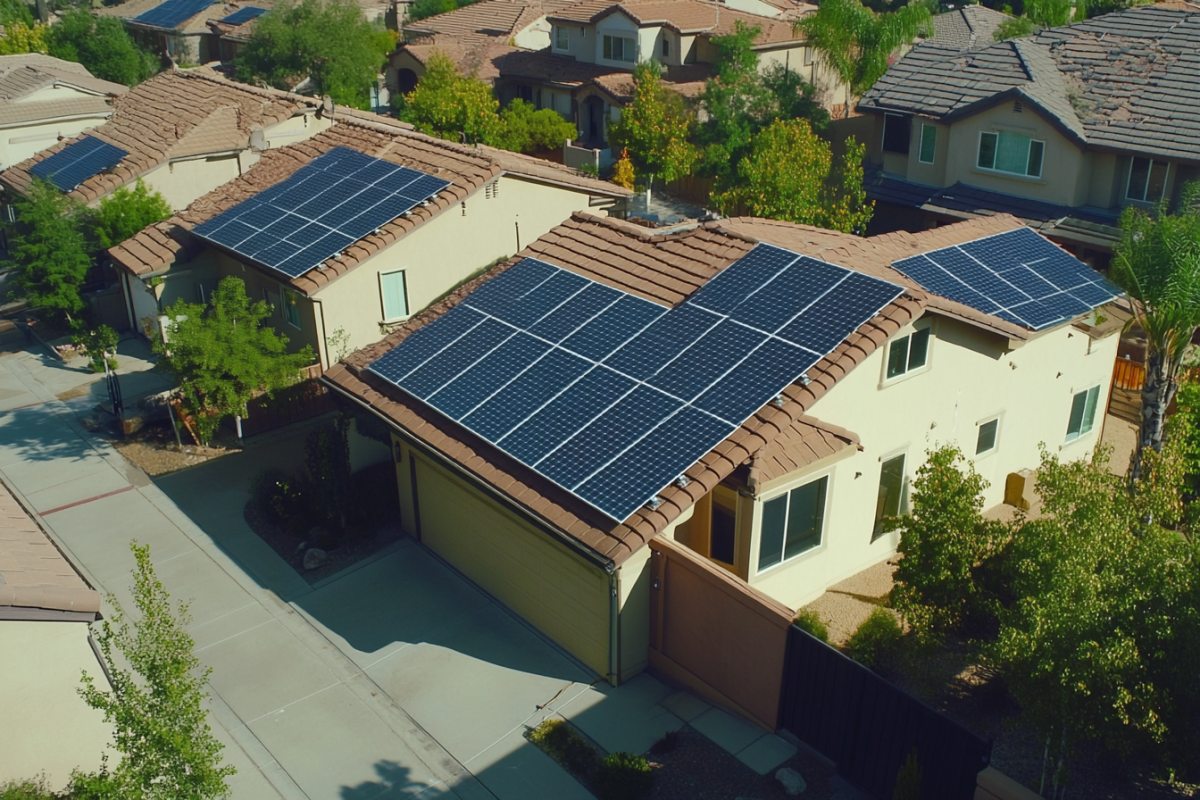
Solar energy, an inexhaustible and accessible resource, is establishing itself as an essential alternative to fossil fuels. In the face of environmental and economic challenges, solar panels are multiplying on the roofs of homes, businesses, and even public spaces. They represent a promising solution to reduce our carbon footprint and move towards energy autonomy. As the world seeks to emancipate itself from polluting resources, solar technology, although complex, is becoming increasingly affordable and efficient. It embodies the hope for a sustainable future, where clean and renewable energy is within everyone’s reach.
The Operation of Solar Panels
Understanding how solar panels work is essential to grasp their potential. These innovative devices convert sunlight into electricity through a fascinating process called the photovoltaic effect.
The heart of this technology relies on the use of photovoltaic cells, generally made of silicon. When photons, the elementary particles of light, strike these cells, they release electrons, thus generating an electric current. This electricity can then be used directly or stored in batteries for later use. Technological advancements have significantly improved the efficiency of these cells, making solar panels increasingly effective and accessible to the general public.
The Ecological and Economic Advantages
Solar panels do not just provide a source of clean energy. They offer significant benefits both ecologically and economically.
- Reduction of CO2 emissions: By using solar energy, we decrease our dependence on fossil fuels, which are responsible for the majority of greenhouse gas emissions. This contributes to the fight against climate change.
- Financial savings: Once installed, solar panels can significantly reduce electricity bills. In some cases, they can even generate additional income through the sale of excess energy.
- Energy independence: By producing their own electricity, each household or business becomes less dependent on fluctuations in the energy market and traditional electrical infrastructures.
- Durability: Solar panels have a lifespan of about 25 to 30 years, making them a long-term investment.
The Challenges to Overcome for Widespread Adoption
Despite their many advantages, solar panels still face certain obstacles to being more widely adopted.
The initial installation cost often serves as a barrier for many households and businesses, although financing solutions and grants exist to mitigate this issue. Furthermore, the efficiency of solar panels depends on sunlight exposure, which can pose difficulties in less sunny regions or during winter months. Finally, integrating this technology into traditional electrical grids requires technical adjustments to manage variations in solar energy production.
Innovations and the Future of Solar Panels
Technological advancements in the field of solar panels promise a bright future for this energy source.
- Active research is being conducted to develop more efficient and less costly photovoltaic cells. Materials like perovskite are being studied to replace traditional silicon.
- Bifacial solar panels, which capture light from both sides, offer increased energy production capacity, even from reflected light.
- Innovations in energy storage, such as lithium-ion batteries and thermal storage solutions, reduce limitations related to periods without sunlight.
- Building-integrated photovoltaic (BIPV) systems allow for the integration of panels directly into construction materials, optimizing space utilization.
By investing in research and promoting supportive policies, it is possible to overcome these challenges and accelerate the transition to cleaner and more sustainable energy. The future of solar panels looks bright, promising a world where renewable energy becomes the norm rather than the exception.