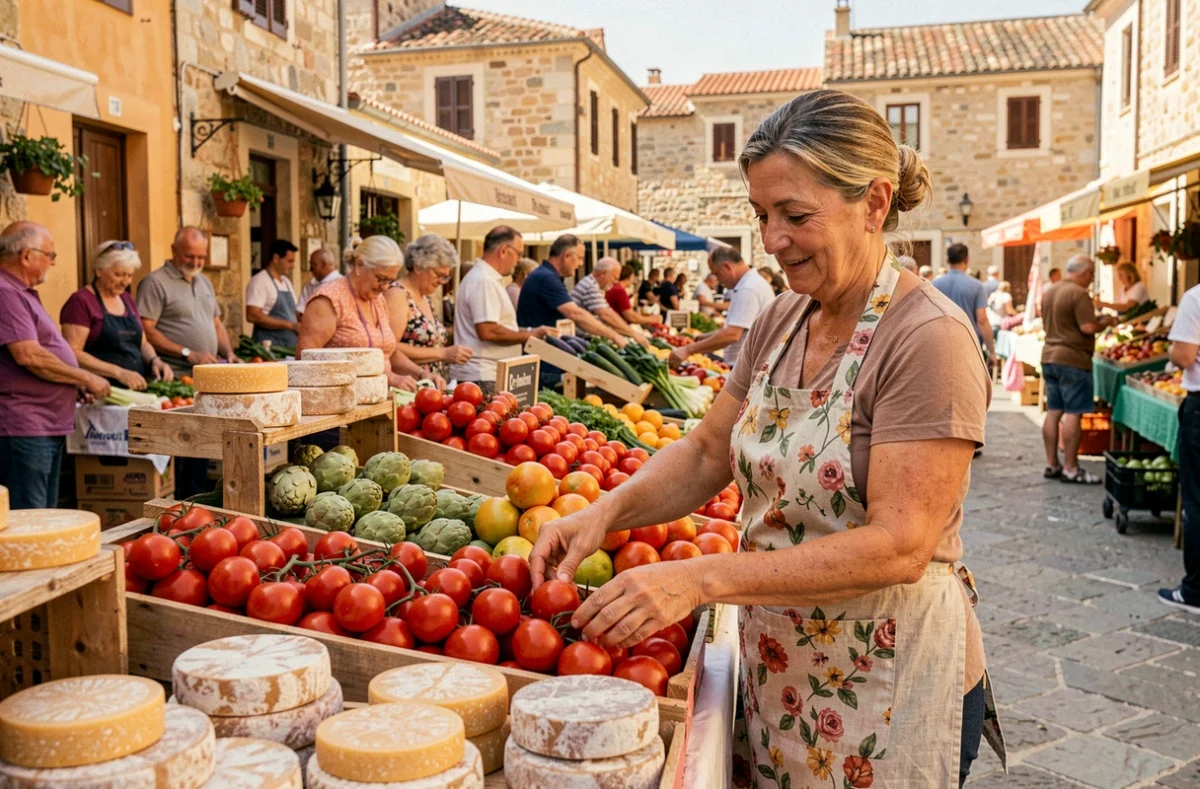
Porto Torres occupies a unique position on the north-west coast of Sardinia. A port city belonging to the province of Sassari, it hosts a market every week where local producers, fishermen, and artisans converge. This market in Porto Torres reflects both the Sardinian eating habits and the tensions inherent in a territory marked by its industrial past and a recent desire for cultural enhancement.
Industrial Past of Porto Torres and Perception of Local Products
Competitors who describe Sardinian markets often avoid a central topic. Porto Torres has long been associated with a petrochemical hub, and pollution issues related to the former industrial site have made local news. This history weighs on the perception of products grown or fished in the area.
Producers selling at the weekly market must navigate this reality. Some emphasize the exact origin of their products (neighboring municipalities, agricultural areas far from the industrial site), while others rely on regional quality labels. Feedback from the field varies on this point: for some residents, the environmental issue is resolved; for others, it remains a purchasing criterion.
This tension between industrial heritage and agricultural renewal gives the Porto Torres market a dimension not found in the stalls of Alghero or Castelsardo. Those interested in discovering the market in Porto Torres in Sardinia find a place where trust between seller and buyer is based on geographical transparency as much as on product quality.
Typical Sardinian Products at the Porto Torres Stalls
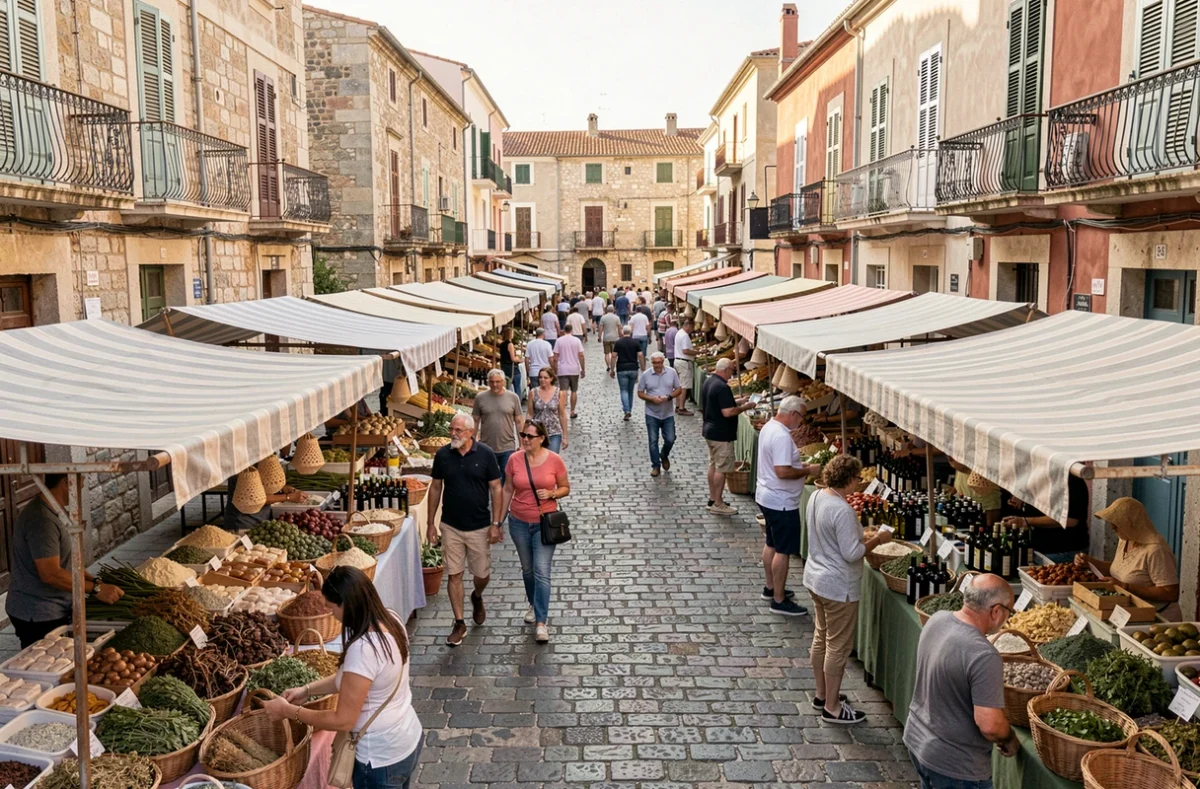
The weekly market brings together a food offering that reflects the traditions of the north-west of the island. Three categories dominate the stalls.
Cheeses and Cured Meats
The pecorino sardo, a hard sheep’s cheese, remains the most visible product. It is available in several maturations, from fresco (young and mild) to stagionato (aged and robust). Pork cured meats, particularly the salsiccia sarda seasoned with wild fennel, hold a comparable place.
Fish and Seafood
The proximity of the port gives the market direct access to local catches. Depending on the season, one can find red mullets, octopuses, sea urchins in winter, and sea bass. The freshness of the fish is the main selling point of the maritime stalls, and sellers often specify the fishing area.
Fruits, Vegetables, and Olive Oil
Sardinian tomatoes, spiny artichokes, and citrus fruits from Campidano make up the vegetable offering. Extra virgin olive oil, produced in the olive groves of the Sassari region, is often sold in bulk directly by the producer.
- The pane carasau, a crispy flatbread of pastoral origin, can be found with several vendors and serves as a base for many Sardinian dishes
- Maquis honey (corbezzolo, strawberry tree) brings a characteristic bitterness that visitors generally do not know
- Local wines, particularly cannonau and vermentino di Sardegna, are sometimes offered for tasting by producers from the province
Suoni e Sapori and Radici di Sardegna: When the Market Becomes an Event
Porto Torres stands out with a program that goes beyond the weekly market. The Suoni e Sapori event, organized at the end of August, combines tasting typical products with concerts by Sardinian artists. This hybrid format transforms the market space into a cultural meeting place, with attendance far exceeding the usual market crowd.
Another event deserves attention. The Radici di Sardegna event, scheduled from October 2 to 4, 2026, at the Tenuta Li Lioni in Porto Torres, places Sardinian tradition in a heritage context. The event is not limited to sales: it offers a cultural reading of food know-how, from sheep farming to artisanal winemaking.
These two events illustrate a local trend. The city seeks not only to sell products but to embed its gastronomic offering in an identity narrative. Available data do not allow for measuring the real economic impact of these events on producers, but their recurrence suggests a lasting presence in the local calendar.
Hours, Access, and Practical Constraints of the Porto Torres Market
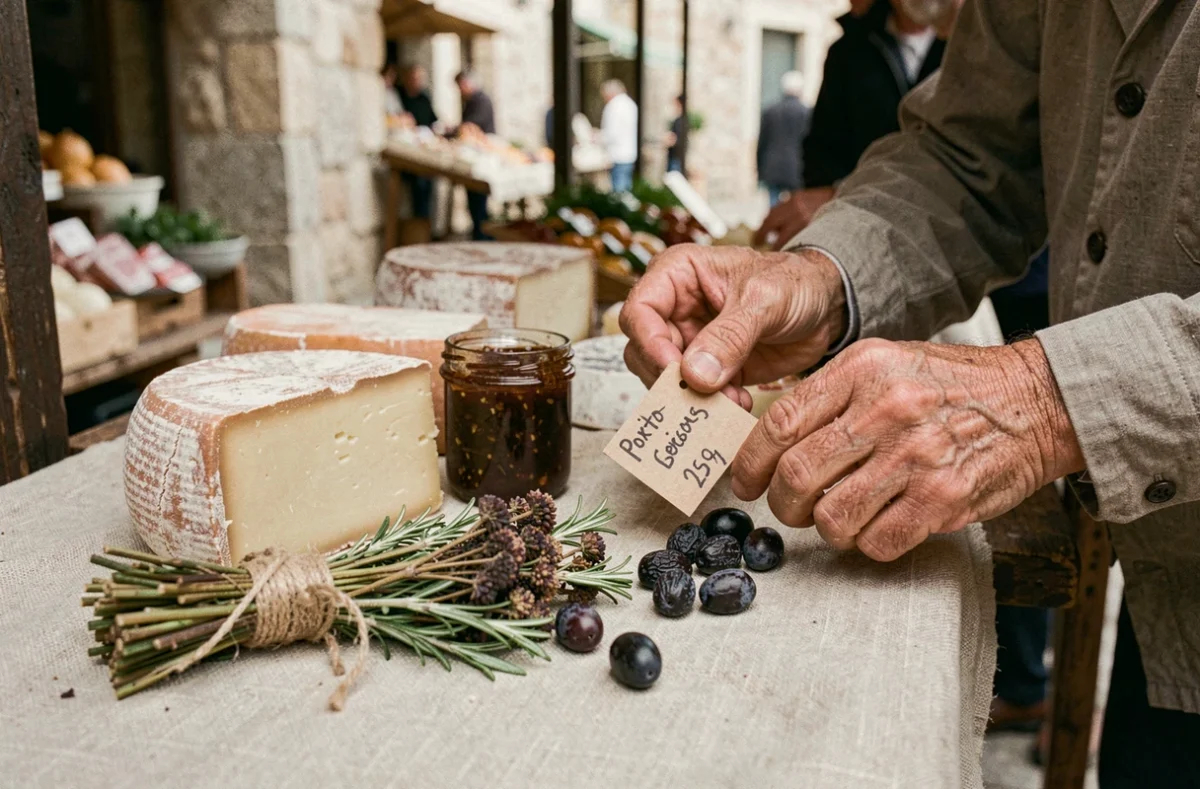
The weekly market takes place in the morning. The food stalls open early, and most vendors pack up before the early afternoon, especially in summer when the heat makes product preservation more delicate.
Porto Torres is accessible by ferry from several ports, including Genoa and Barcelona, making it a frequent entry point for motorized visitors. The city is about twenty minutes from Sassari by road. The market is located in the center, near the port.
- Parking spaces close to the market fill up quickly on market day, especially in the summer season
- Cash payment remains the norm with most small producers, although some accept cards
- Fresh products (fish, cheese) require a cooler if the visit extends with high temperatures
The atmosphere of the market changes significantly between the low season, where the clientele is almost exclusively local, and the months of July-August, when tourists alter the dynamics of the stalls. Some vendors adapt their offerings to this seasonality, offering smaller portions or packaging suited for transport.
The Porto Torres market remains a living place rooted in the daily life of the city rather than a formatted tourist attraction. Its interest lies precisely in this ordinary character, in the quality of exchanges with producers, and in the opportunity to taste Sardinian products in their original context, away from standardized distribution channels.